

A Healthy Morning Routine That Doesn’t Need a 4AM Wake-Up Call

Most morning routine articles online feel like a sales pitch. Wake at 4am. Cold plunge. Twenty supplements. Journal three pages. Run five miles. By 7am you’ve already conquered the world, which is great, except nobody actually lives like that, including the people writing those articles.
I want to show you what a real, healthy morning routine looks like for a regular person. This is mine. It’s calm, it’s repeatable, and it took me years of trial and error to settle on it.
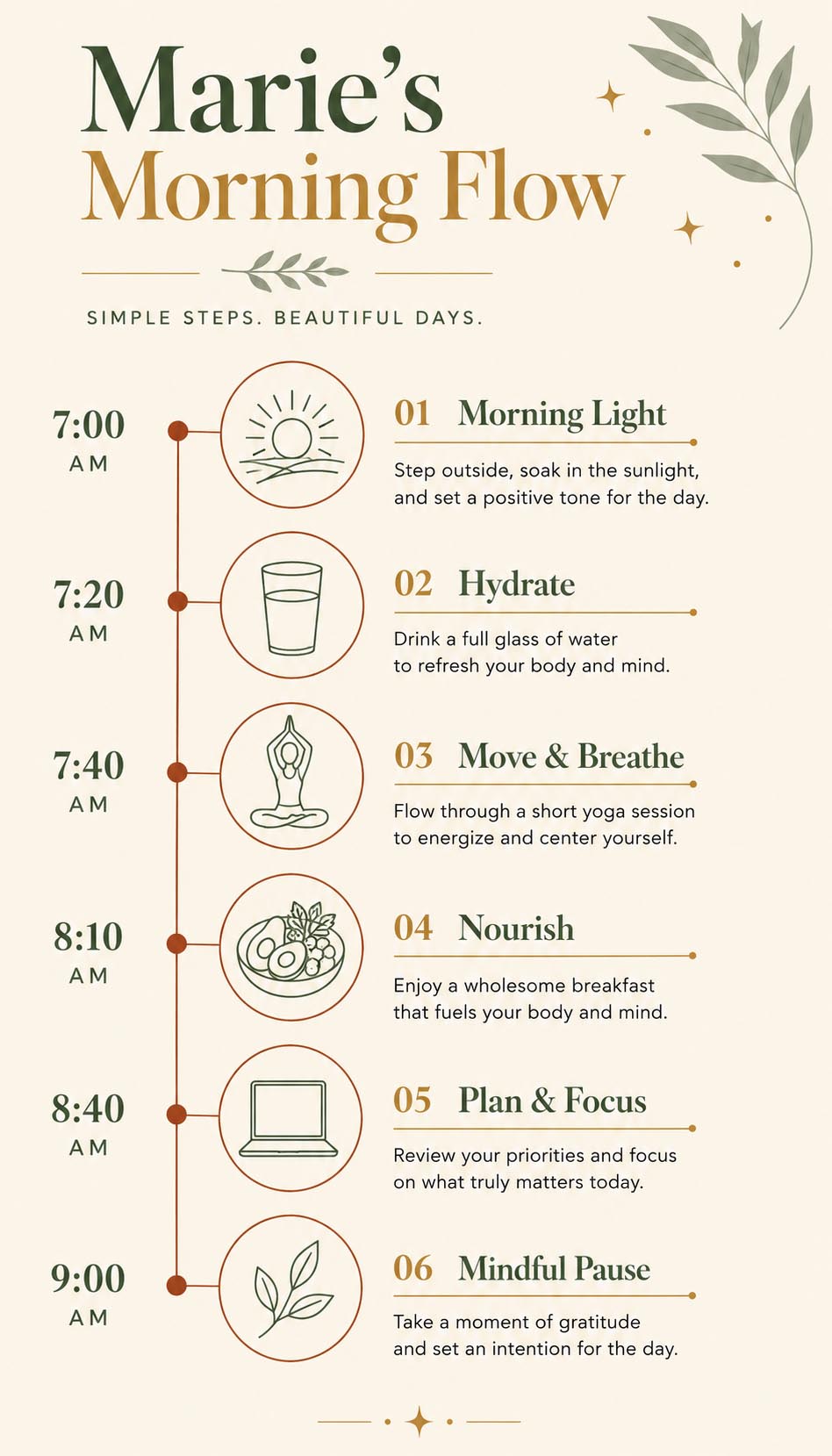
A healthy morning routine doesn’t need to be early, intense, or complicated. The version I’ve stuck with for over four years has six small habits done in the same order: wake naturally, drink water, move gently, eat something simple, do focused work, then take a break before the rest of the day starts.
The Six Habits That Actually Stick
1. I Wake Up Without an Alarm (Most Days)
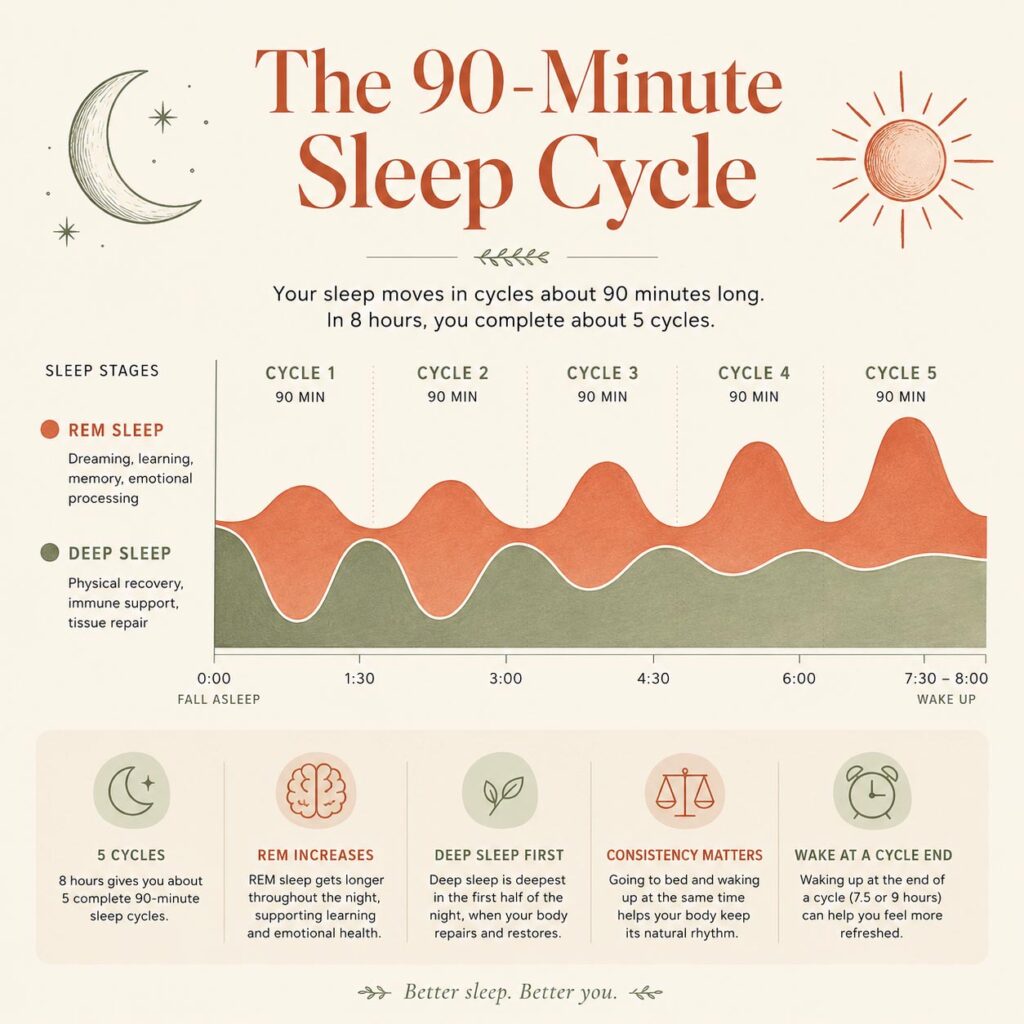
For three years I tried the 5am club. It worked for about a week each time. Now I wake between 6:30 and 7:00 naturally because I go to bed at the same time every night. Sleep hygiene matters way more than wake time.
2. Water Before Phone
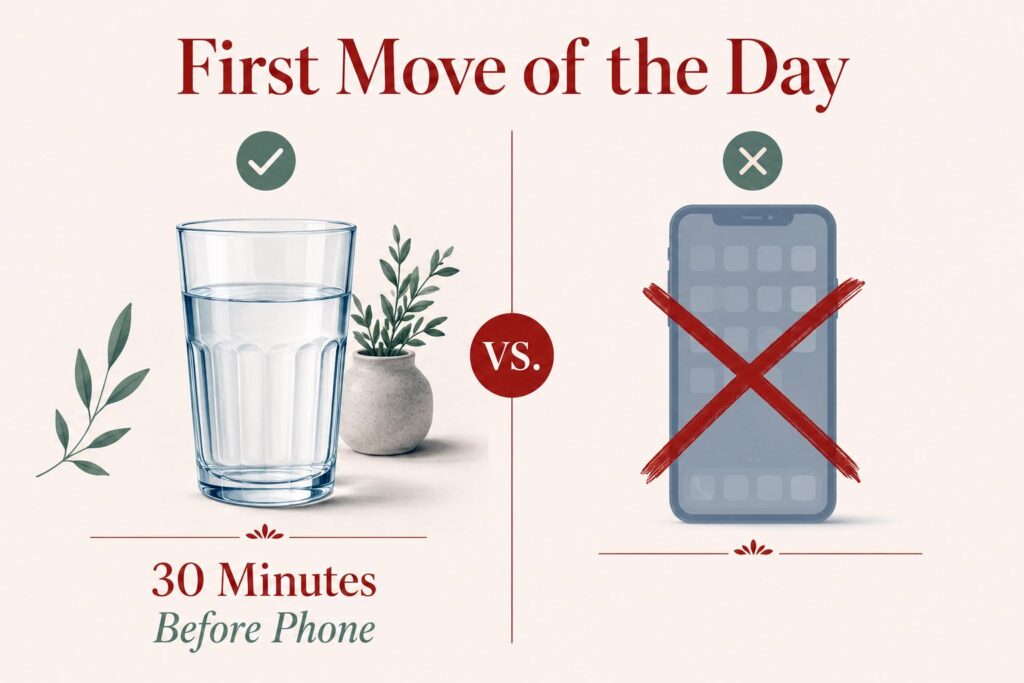
The first thing I do is drink a full glass of water sitting on my nightstand. Not lemon water. Not celery juice. Plain water. Your body is mildly dehydrated after seven hours of sleep, and rehydrating before caffeine helps with energy, digestion, and skin.
The phone stays face-down for at least 30 minutes.
3. Ten Minutes of Movement
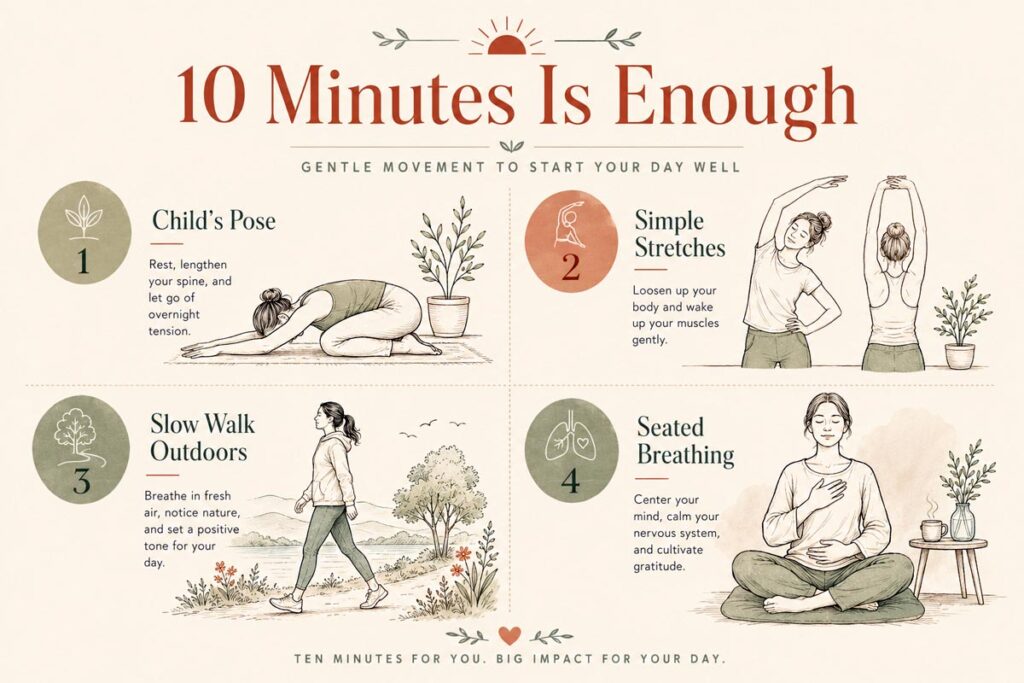
Some mornings it’s gentle yoga. Some mornings it’s stretching in bed. Some mornings it’s a slow walk around the backyard. The movement is never intense, never hard. Research from the National Institutes of Health on circadian rhythm shows even light morning movement helps regulate cortisol and energy.
4. A Simple Breakfast
I keep breakfast boring on purpose. Greek yogurt with berries, or eggs on toast, or oatmeal with banana. Protein, fiber, fat. The point isn’t optimization. The point is to stop thinking about food before noon so I can think about other things.

5. Focused Work Block (60 to 90 Minutes)
I do my hardest writing first. No email. No Slack. No social media. Just the laptop, a mug of coffee, and one task. This is where habit stacking pays off. By the time I sit down, the rest of the routine has already prepared my brain.
6. A Real Break Before The Day Begins
Around 9am I stop, stretch, and step outside for five minutes. Fresh air, daylight, no phone. Then the rest of the day starts. This break is the part most routines skip, and it’s the part that keeps the morning from blurring straight into burnout.
What I Stopped Doing
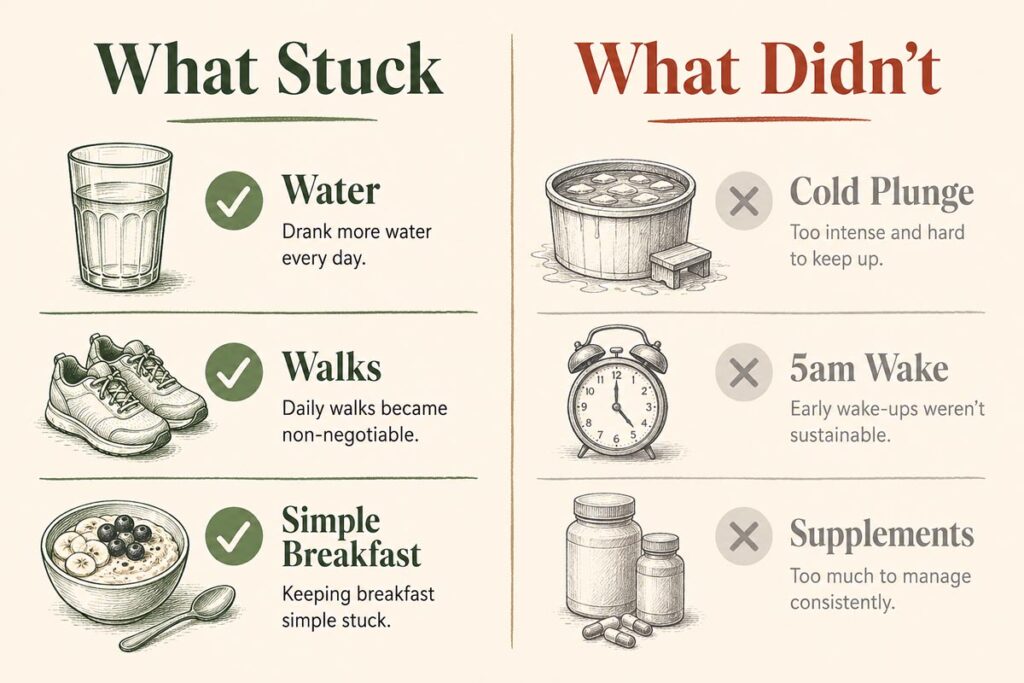
I tried cold showers, ice baths, breathwork apps, oil pulling, journaling for thirty minutes, Pomodoro before sunrise, and meditation timers. Most of it didn’t stick. Some of it stressed me out more than it helped.
Here’s the rule I follow now: if a habit doesn’t fit my life within two weeks, I drop it without guilt. Productivity culture treats this like failure. It isn’t. It’s editing.
Why Boring Habits Beat Trendy Ones
The reason this routine works isn’t because it’s optimized. It’s because it’s simple enough that I do it on hard days. On bad sleep days. On low-motivation days. On days I’d rather hide under a blanket.
A morning routine you can keep when life is messy is worth more than a perfect one you abandon every other week.
If you want to build your own, start with one habit. Just one. Add the next only when the first feels automatic. The whole thing takes months, not days, and that’s okay.
Final Thought
Your morning belongs to you. It’s not a productivity contest. It’s the first hour of your day, and it should feel like care, not punishment.
Start small. Stay honest. Edit often.
— Marie