
Slow Morning Routine: How to Build One When You Hate Mornings

I hated mornings until I stopped trying to optimize them. Every productivity article said wake at 5am, journal, exercise, meal-prep, and conquer the day. I tried it. I burned out in nine days.
The slow morning routine I built afterward is the only thing that’s lasted. It’s quiet, unimpressive, and nothing like what the internet tells you a “best morning routine” should be.
A slow morning routine prioritizes calm over productivity. The best morning routines for people who hate mornings include a gentle wake time (no harsh alarm), 30 minutes of phone-free quiet, one nourishing habit, and zero pressure to accomplish anything before 9am. It’s a permission slip, not a checklist.
Why Fast Morning Routines Fail Most People
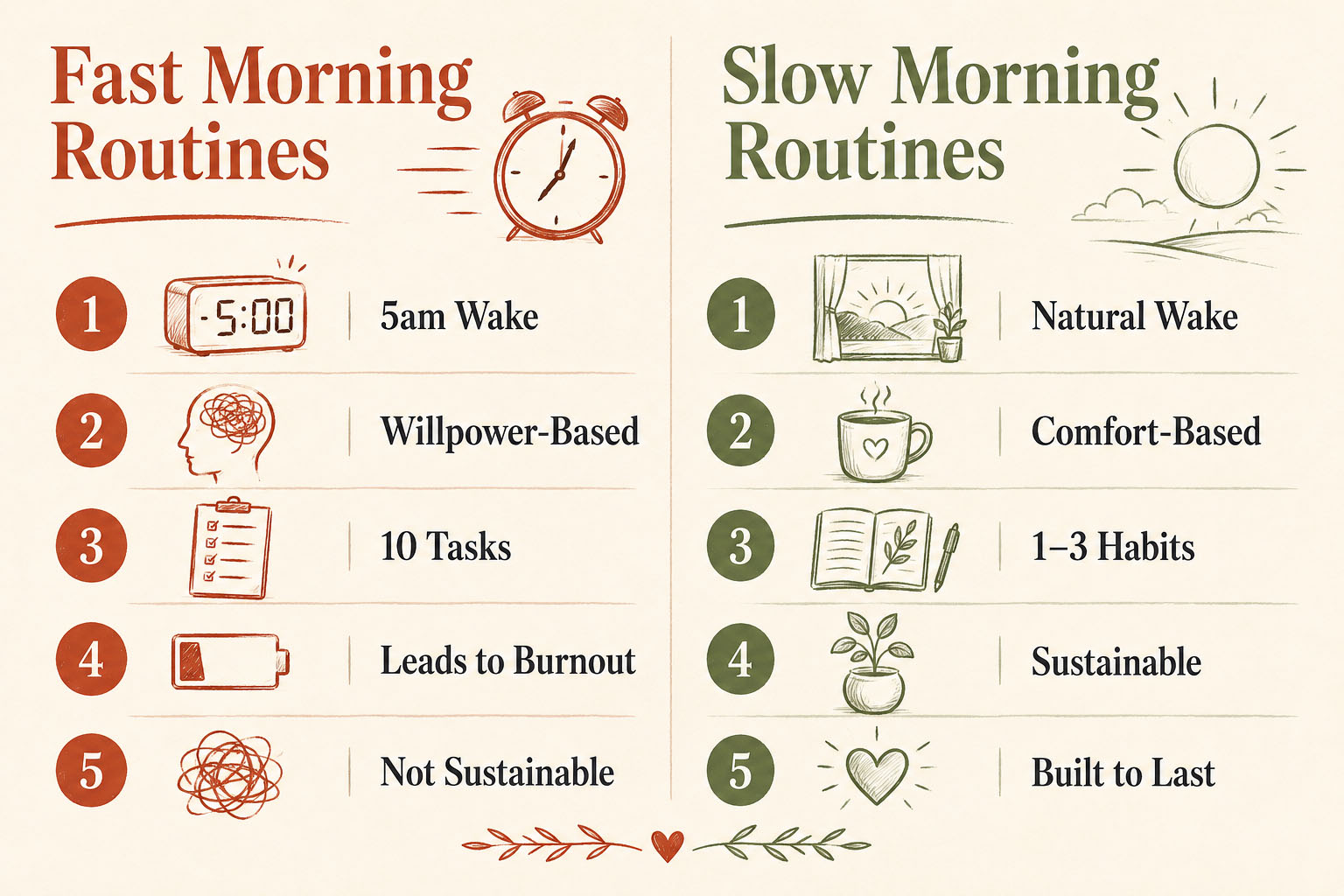
Most morning routines online are designed for people who already love mornings. They assume motivation, discipline, and energy at 5am. If you have those, those routines work.
If you don’t, those routines feel like punishment. Research from the American Psychological Association on habit formation shows that routines built around willpower fail within 21 days. Routines built around comfort and ease last for years.
The 4 Rules of a Slow Morning
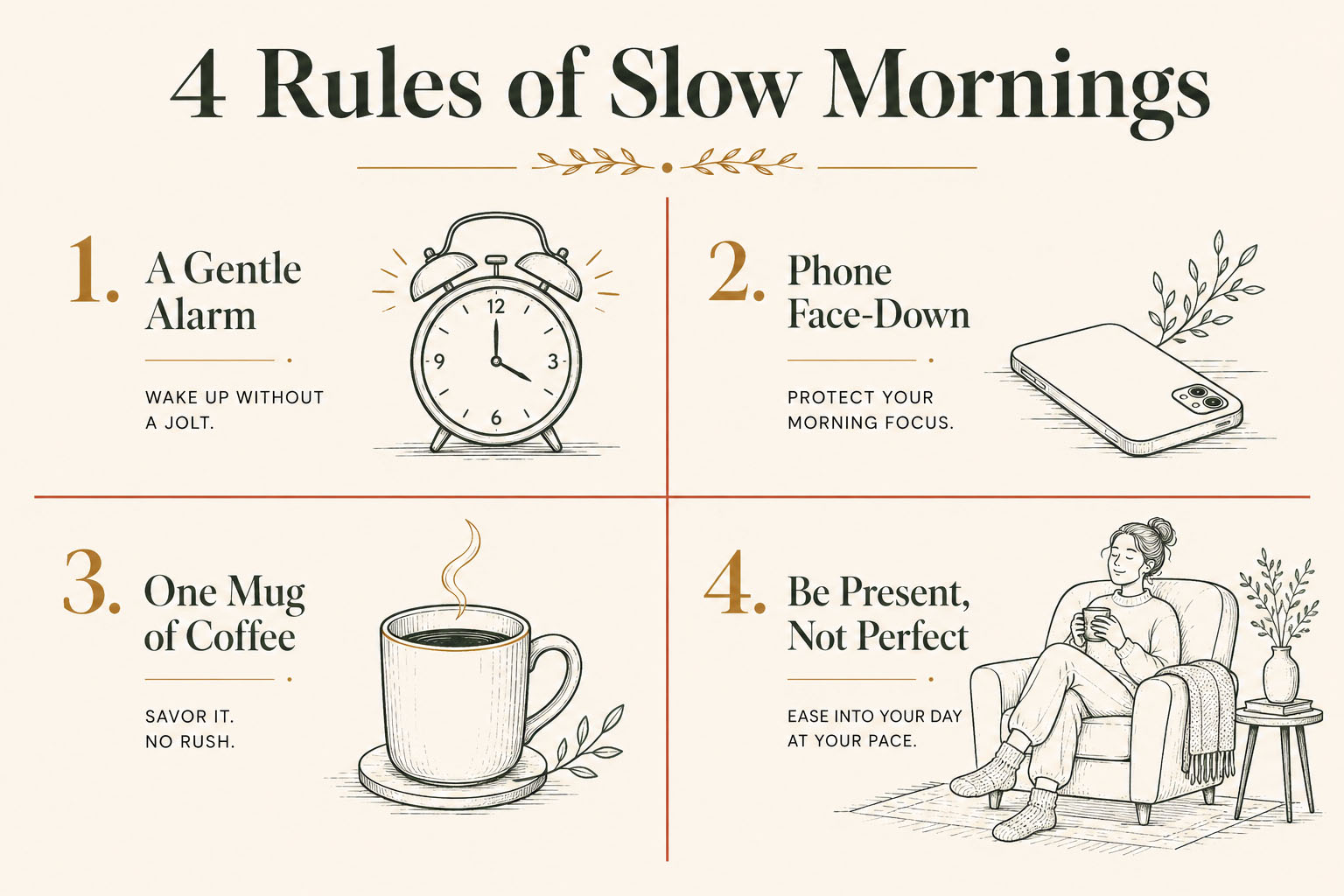
1. No Alarm Sounds That Startle You
Harsh alarms spike cortisol immediately, putting you in stress mode before your eyes open. Switch to a sunrise alarm clock, gentle music, or a vibrating wearable.
If you must use a phone alarm, pick the softest tone available and place the phone across the room.
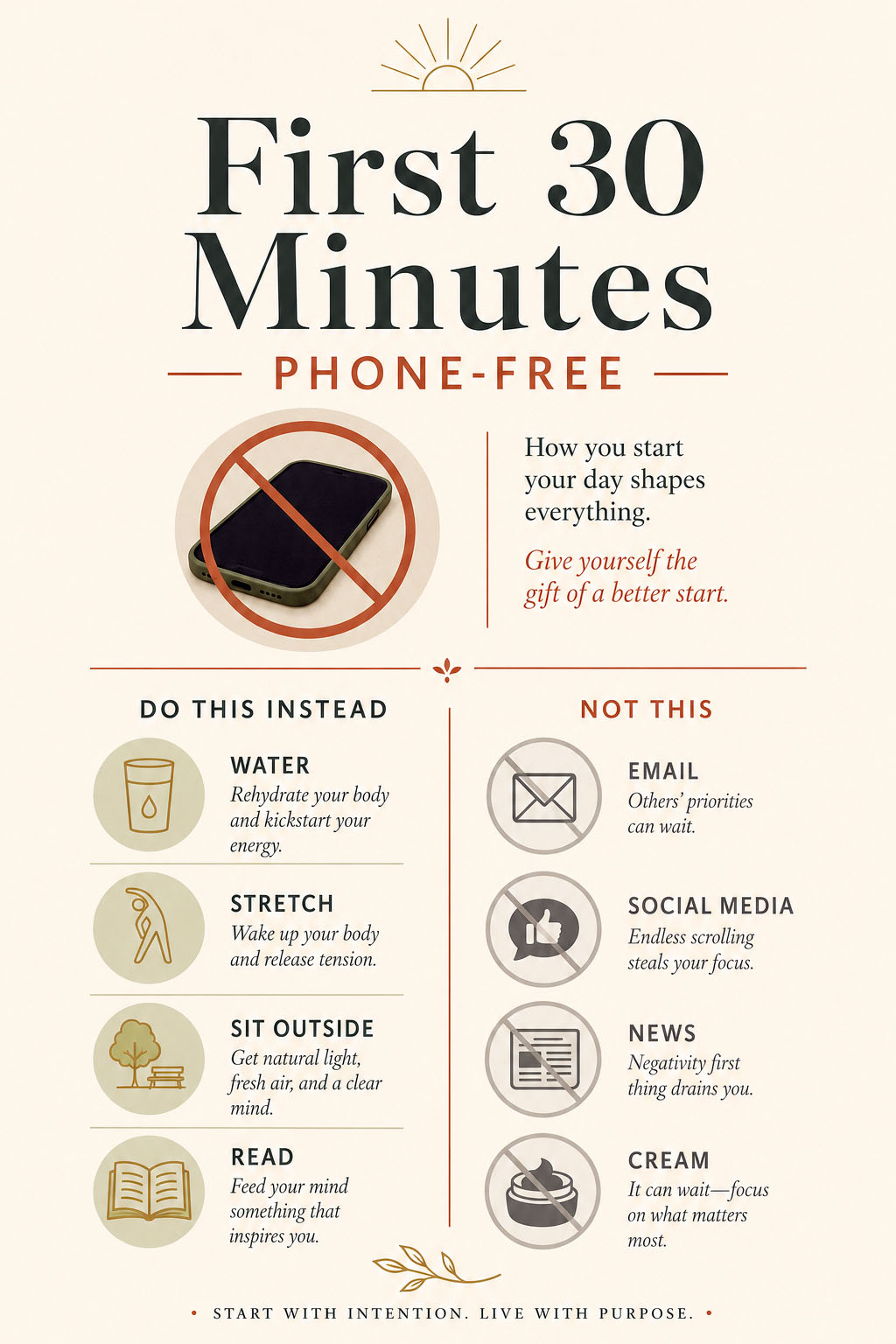
2. Phone-Free for the First 30 Minutes
This is the single biggest change. Checking your phone before getting out of bed dumps other people’s priorities into your brain before you’ve had a chance to set your own.
Charge your phone in another room. Use a basic alarm clock. The first 30 minutes belong to you.
3. One Nourishing Habit, Not Five
Pick one thing that genuinely makes your morning feel better. Slow coffee. A warm shower. Stretching in bed. Reading a few pages. Sitting outside.
That’s the routine. Just one thing. Done well.
Learn more: Notes of A Healthy Morning Routine
4. Permission to Be Unproductive
You don’t owe anyone a journal entry, a workout, or a green smoothie before work. The morning isn’t a performance review. It’s the time before the day starts asking things of you.
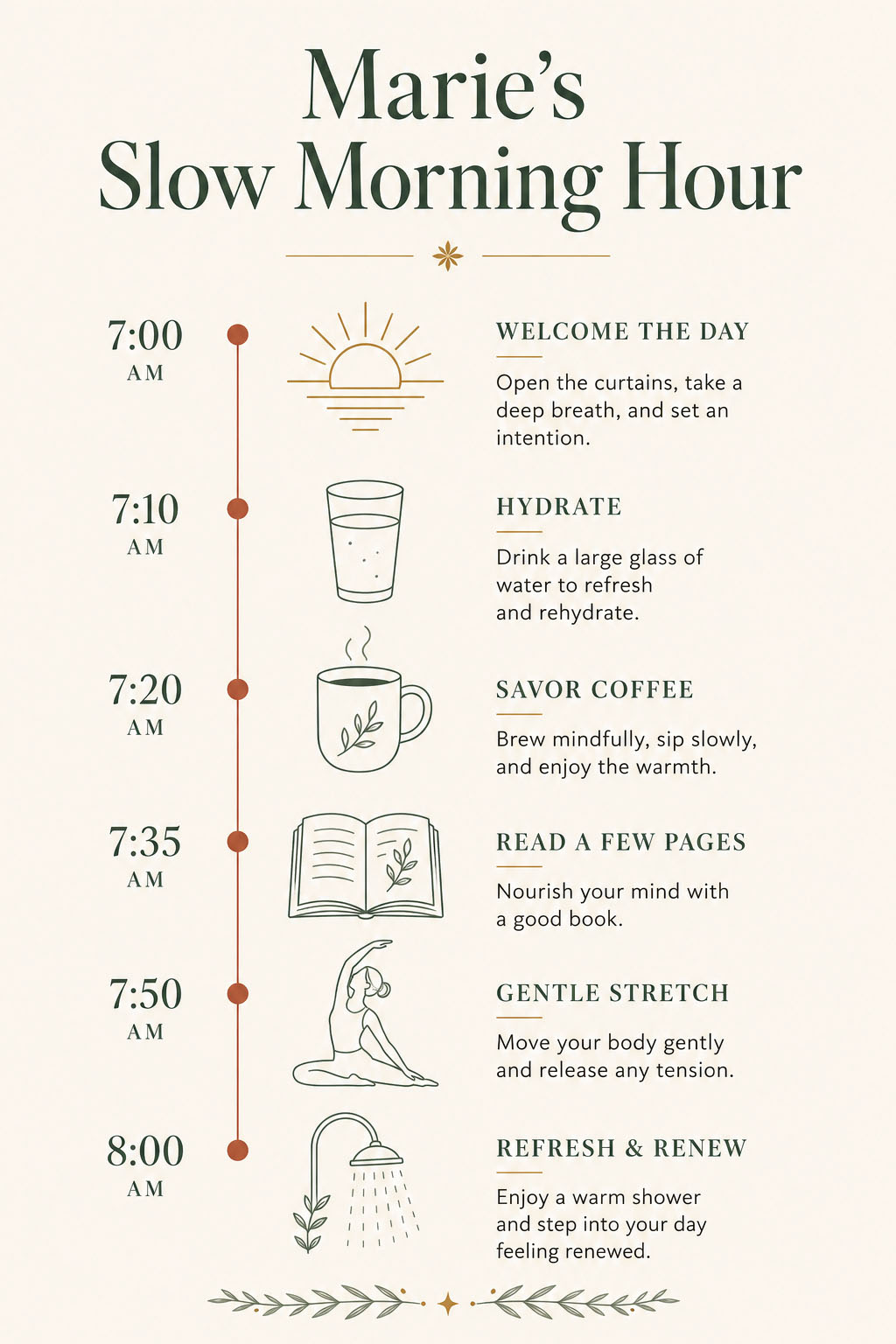
What My Slow Morning Actually Looks Like
7:00 AM: Natural wake-up, no alarm.
7:05 AM: Glass of water, sitting on the edge of the bed.
7:15 AM: Pour coffee, sit by the window. No phone.
7:30 AM: Read or journal for 15 minutes.
7:45 AM: Slow stretches in pajamas.
8:00 AM: Shower and start the actual day.
That’s it. One hour, no productivity, no metrics. It looks lazy compared to the 5am crowd. It works for me in a way 5am never did.
The Hardest Part: Letting Go of Guilt
The first week of a slow morning routine feels wrong. Years of productivity content has wired most of us to feel guilty for not optimizing every hour.
That guilt is the obstacle, not the solution. Push through two weeks of feeling unproductive. Notice that nothing in your life actually falls apart. Notice that you’re calmer by noon, not behind.
That’s the proof.

How to Build Yours
Start by removing one fast-morning habit. The phone alarm. The immediate email check. The pre-coffee workout. Pick the worst offender and replace it with five minutes of quiet.
Add one nourishing habit. Just one. Coffee with no screens. Reading in bed. Looking out a window.
Keep doing it for two weeks before adding anything else. Slow morning routines are built one removed habit at a time, not one added one.
When Slow Mornings Don’t Work
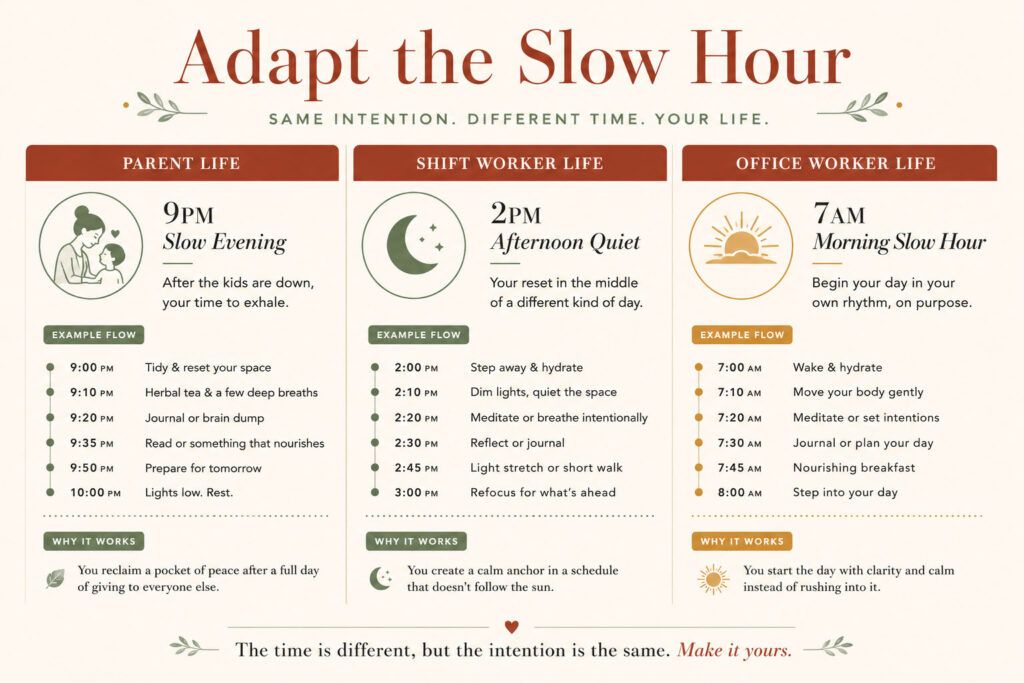
Parents of small kids. Early shift workers. People whose mornings are non-negotiable.
If your morning belongs to other people, the slow morning routine moves to a different time of day. Build a slow evening routine instead. Same principles, different hour.
The goal isn’t morning specifically. The goal is one hour a day that belongs entirely to you.
Final Thought
The best morning routines aren’t the ones that look impressive on Instagram. They’re the ones you can keep doing on the days you’re tired, sad, sick, or sad again.
A slow morning routine forgives you. That’s why it sticks.
Tomorrow, try this: no phone for 30 minutes, one warm drink, one quiet activity. See if the day starts differently.