
What Is Your Morning Routine? IELTS Speaking, Made Simple

I froze at small talk for years. Someone would ask about my morning, and I’d ramble or go blank. So when readers started emailing me about the “what is your morning routine” IELTS speaking question, I knew that panic well.
Here’s the good news. You already live a morning. You just need to describe it like a calm, normal person. That part I can help with.
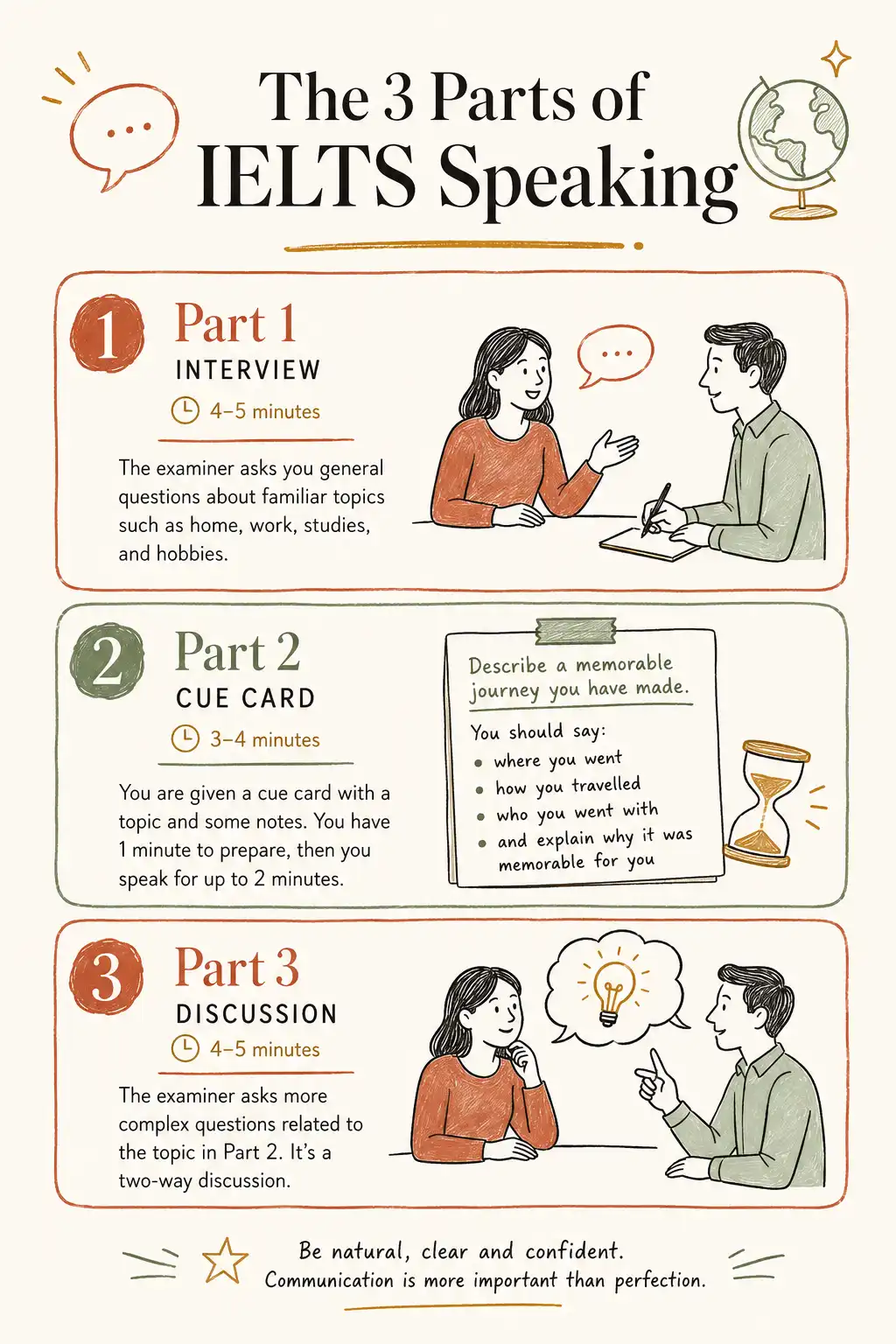
The “what is your morning routine” question shows up in IELTS Speaking Part 1, the friendly warm-up. Examiners want a natural, detailed answer, not a memorized speech. Say what you really do, add one reason or feeling, and use easy phrasal verbs like wake up, get up, and grab breakfast.
Why This Question Comes Up
It comes up because Part 1 covers familiar, everyday topics. The examiner asks about your home, your studies, your free time, and your mornings.
The topic is easy on purpose. It helps you relax and start talking. So treat it like a friendly question, not a trap.
What Examiners Actually Want
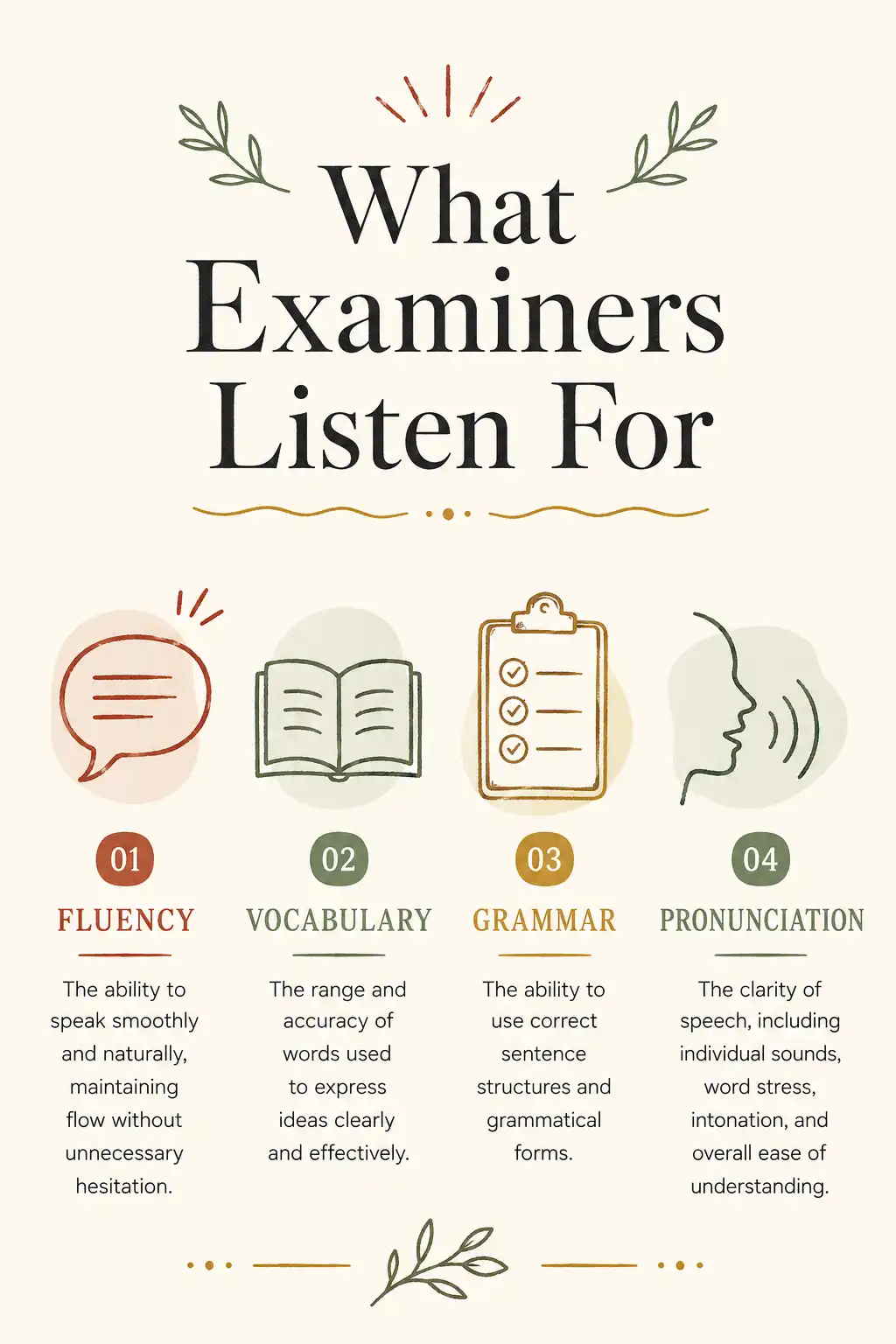
They want fluency and coherence, not perfection. That means you speak smoothly and connect your ideas without long, frozen pauses.
They also listen for your lexical resource, which is just a fancy term for vocabulary range. Your grammar and pronunciation count too. Nobody expects a flawless robot, though.
How to Answer “What Is Your Morning Routine” in IELTS Speaking
Give two or three sentences with a little detail, then stop. Don’t rattle off ten things in a rush. Don’t give a one-word answer either.
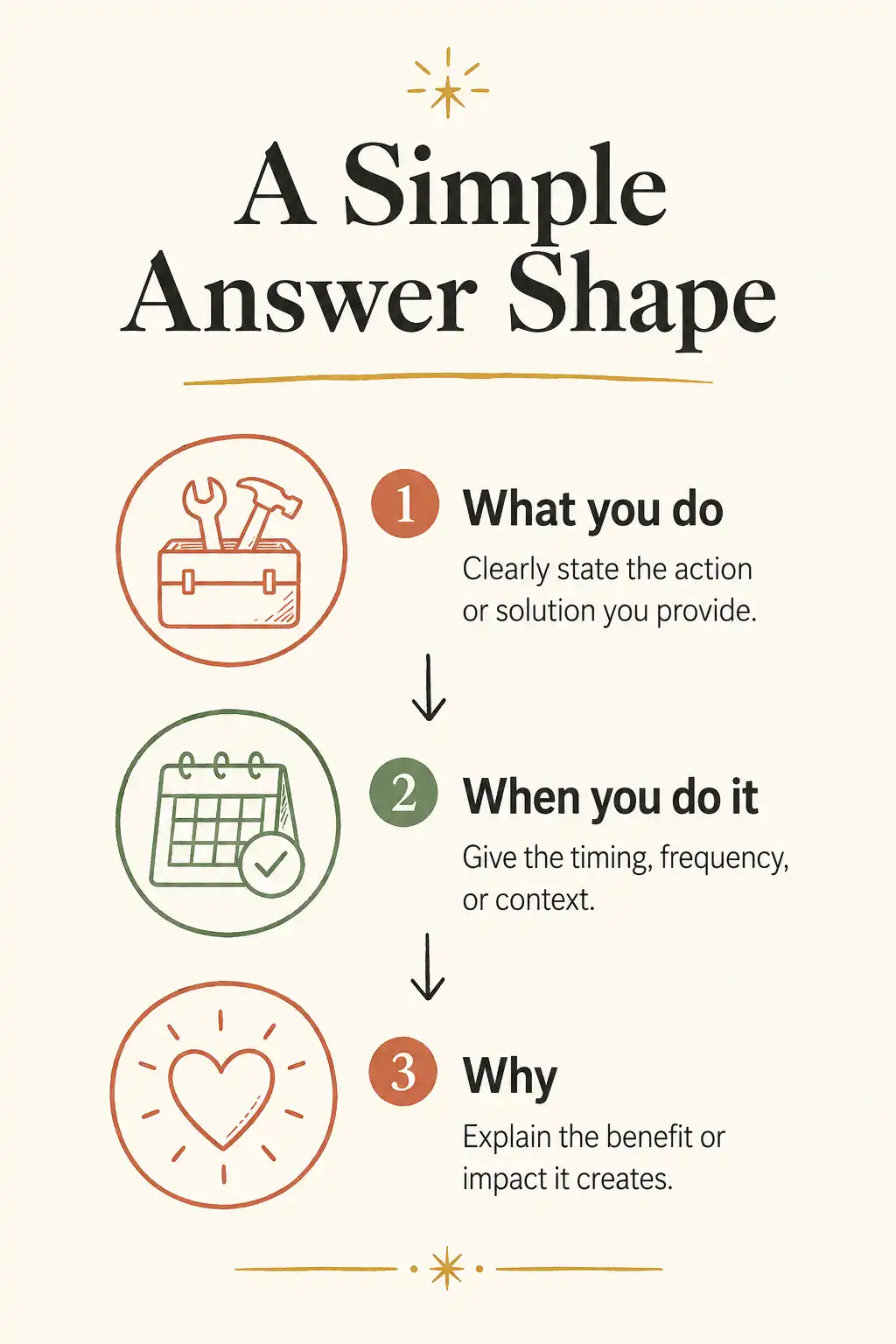
A simple shape works best. Say what you do, when you do it, and why. The “why” is what makes you sound like a real person.
Try this: “I usually wake up around seven. The first thing I do is make coffee, because I can’t think straight without it.” Short, true, easy to say.
Useful Words and Phrases
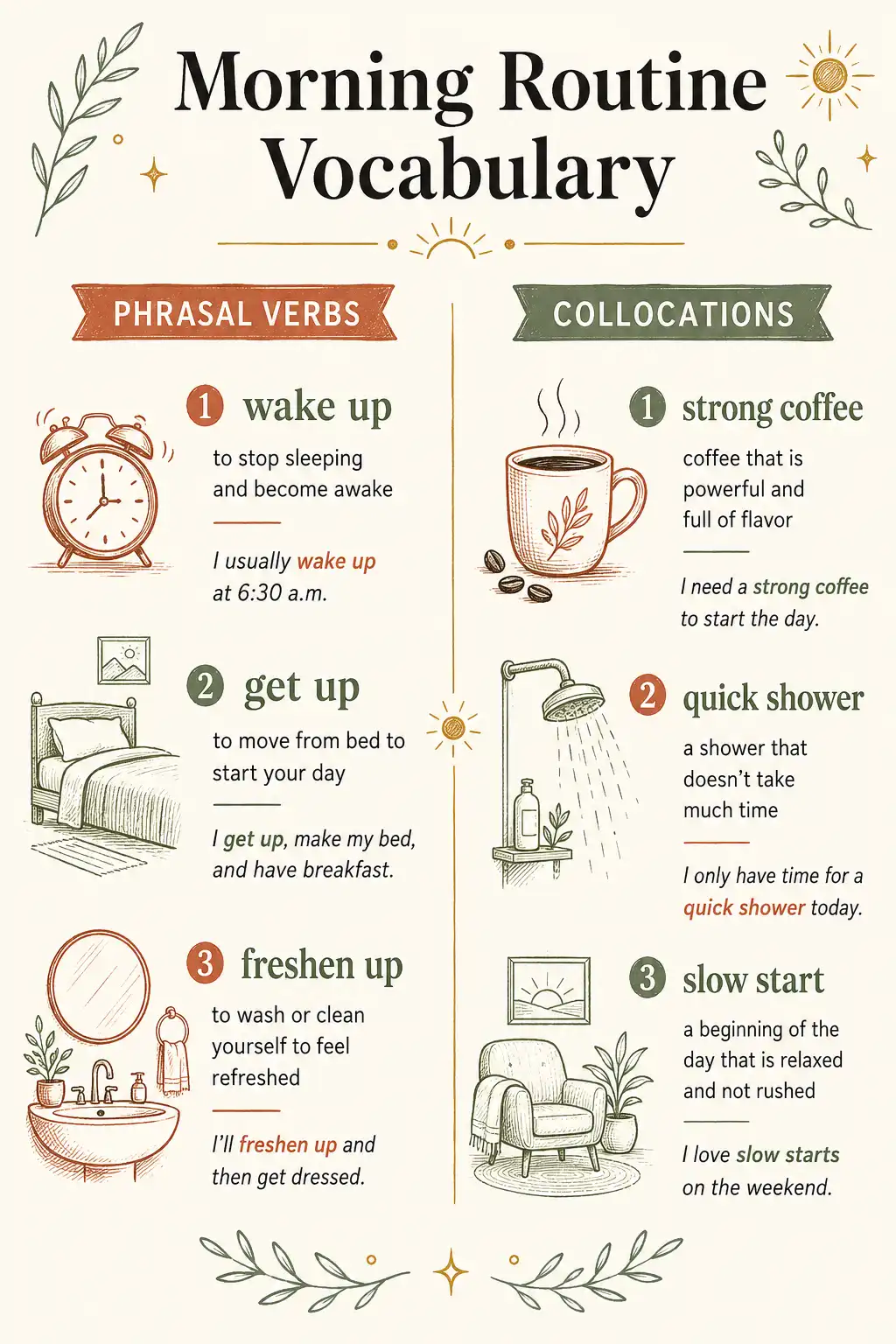
Phrasal verbs make you sound natural. Wake up, get up, hit the snooze button, freshen up, grab a quick breakfast, head out the door.
Collocations help too. Try “a strong cup of coffee,” “a quick shower,” or “a slow start.” These small word pairs lift your band score more than rare, showy words. If coffee isn’t your thing, water works too, and I’ve written about why plain water first thing has its fans.
My Own Answer (Borrow the Shape)
Here’s how I’d answer, using my real morning. Watch the structure, not the exact words.
“I’m not a natural early riser, but these days I wake up around 6:45 without an alarm. I make a black coffee and sit by the window for a while. My dog usually wants a walk before I’ve even finished it. It’s a slow start, and that’s how I like it.”
Four sentences. A feeling, a detail, a tiny story. That’s the whole trick. It took me years and a failed 5am experiment to land on a rhythm this calm.

Common Mistakes to Avoid
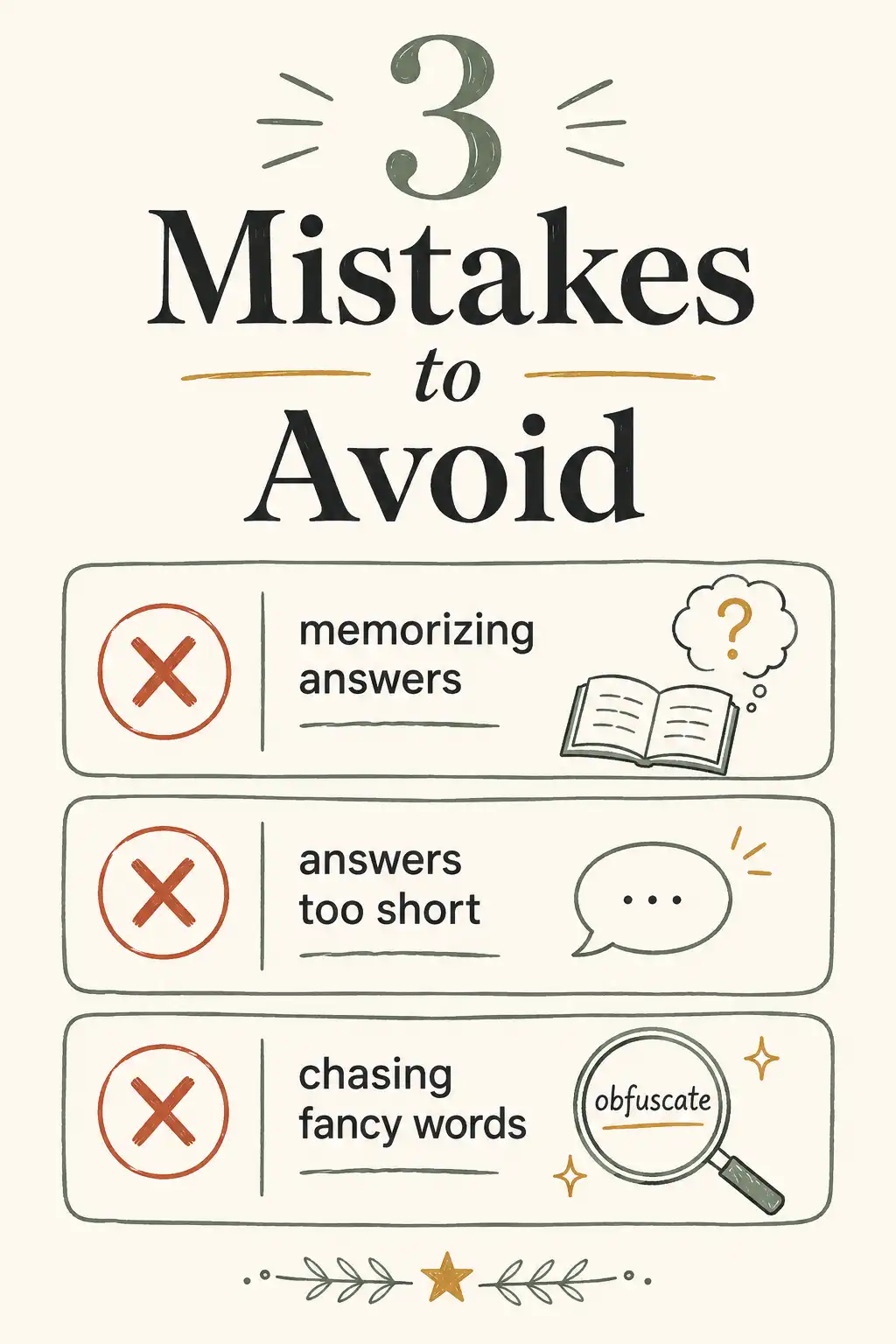
The biggest one is memorizing. Examiners hear scripted answers all day, and they sound flat and stiff. You can lose marks for it.
The second is going too short. “I wake up and go to work” gives them nothing. Add one more line.
The third is chasing fancy words. Simple and clear beats complicated and wrong, every single time.
Practice the Calm Way
Talk about your morning out loud, in English, to yourself. Do it while the coffee brews. Thirty seconds a day adds up fast.
For real phrasing you can borrow, read how a slow morning routine comes together, or how a short ten-minute start can work on a busy day. Hearing ordinary mornings described in plain words is better practice than any word list.
It also helps to know the shape of the test. Part 1 runs about four to five minutes and sticks to familiar topics like home, work, and your daily routine. Your morning fits right in.
Final Thoughts
You don’t need a dramatic morning to pass. You need a real one, described simply and warmly.
Speak like you’re telling a friend what your morning looks like. That ease is exactly what the examiner is listening for.
Good luck in there. You’ve got this.
— Marie