
5AM Morning Routine: 30 Days In, Here’s What Actually Changed

I joined the 5am club for thirty days. Not as research. Not for content. I genuinely wanted to know if waking up before the sun would change my life the way every productivity guru on the internet promised it would.
It did change things. Just not the things they said it would.
A 5am morning routine works for some people but not most. After 30 days, my productivity barely changed, my sleep suffered for the first two weeks, and the real benefit was psychological, not physical. If you’re not already a natural early riser, the cost usually outweighs the gain.
Why I Tried It
I’d read enough Robin Sharma, Jocko Willink, and “billionaire morning routines” to feel like I was missing something. Every successful person on YouTube was up at 5am. Maybe that was the missing piece.
I also wanted honest data for the readers who keep asking me whether the 5am routine is worth it. So I committed to thirty straight days. No skipping. No 5:15. Five sharp.
Also see: 15-Minute Morning Yoga Routine for Beginners
My Daily 5AM Routine
Here’s what the routine actually looked like:
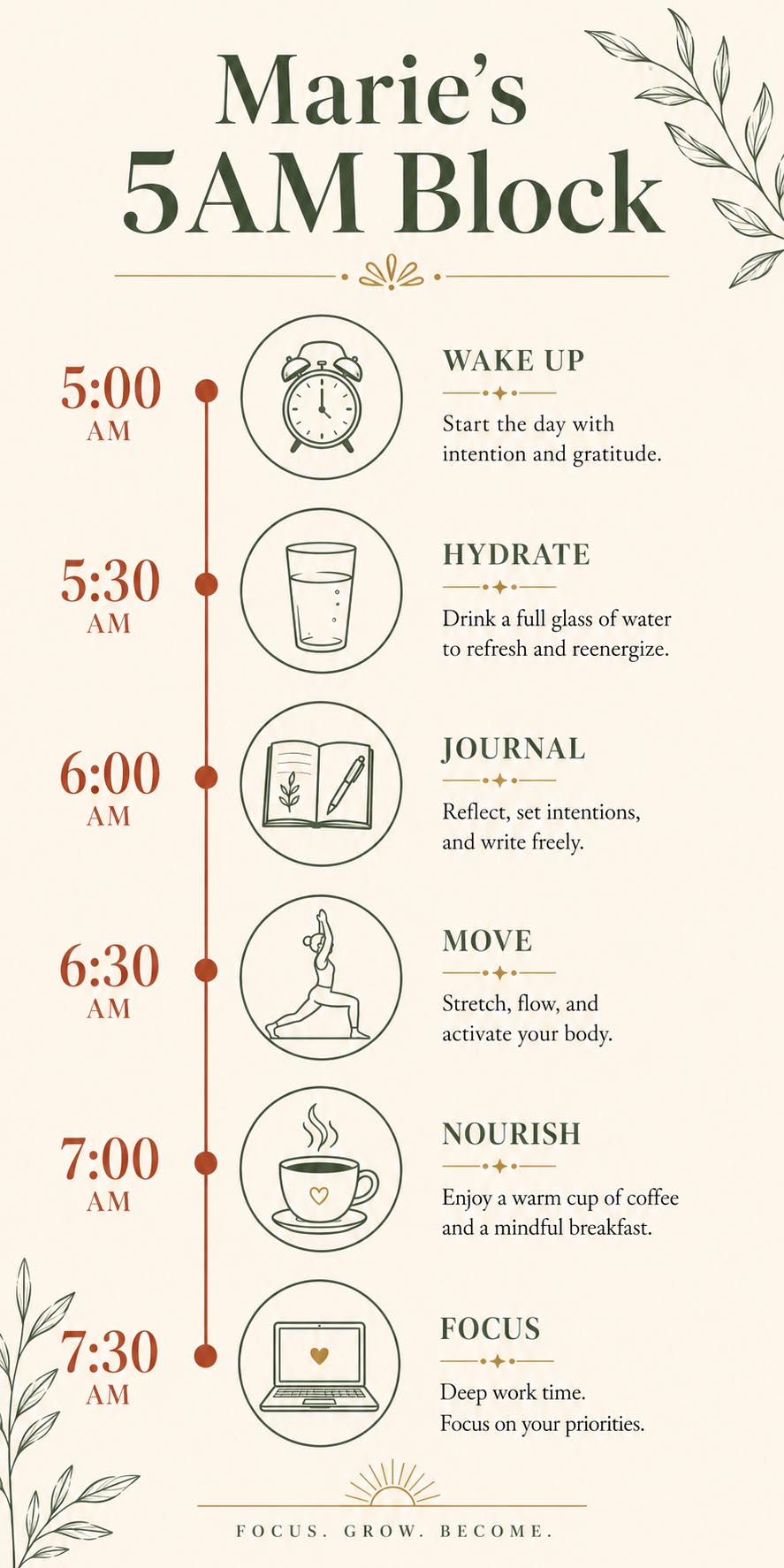
5:00 AM Alarm. Up immediately, no snooze. 5:05 AM Glass of water, splash cold water on face. 5:10 AM Ten minutes of journaling. 5:25 AM Fifteen minutes of yoga or stretching. 5:45 AM Coffee and reading. 6:30 AM Focused writing block. 8:00 AM Real breakfast, regular morning continues.
Week 1: Brutal
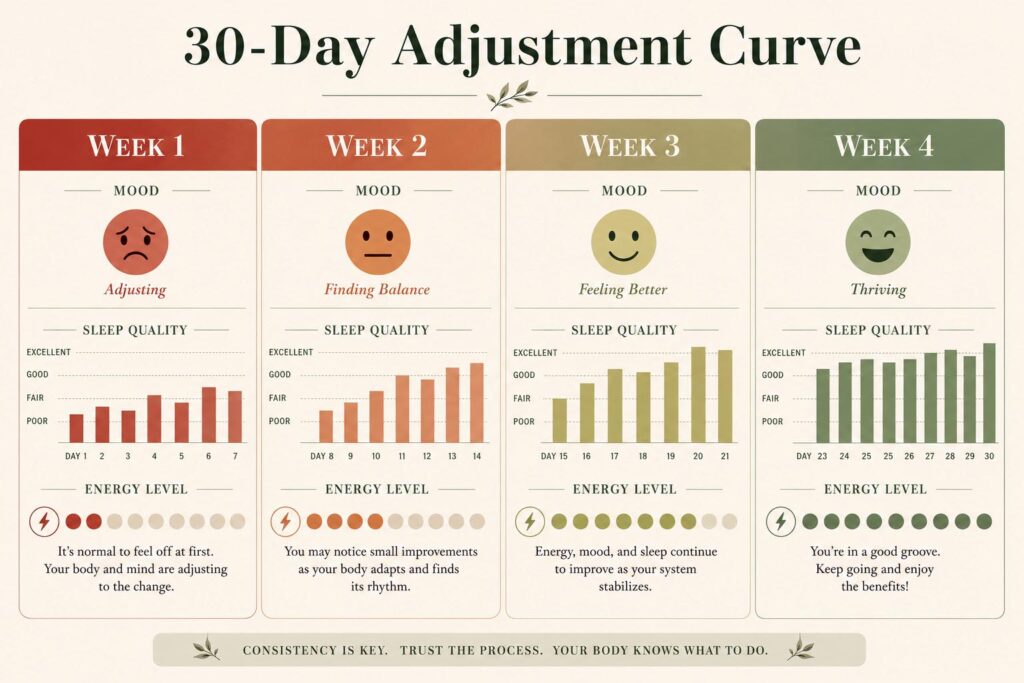
The first week was the worst sleep of my year. I went to bed at 10pm but couldn’t fall asleep until 11:30. The 5am alarm felt like an attack. I was running on six hours of sleep by Wednesday and felt foggy until noon.
The journaling was useful. Everything else was a fight.
Week 2: Slightly Better
By day ten, my body started shifting. I was getting tired around 9:30pm naturally. Falling asleep faster. Waking up more easily. The science checks out here. Research from the Sleep Foundation shows it takes most adults 10 to 14 days to shift their circadian rhythm by an hour or more.
I still didn’t enjoy it. But I stopped hating it.
Week 3: The Surprise
Week three was when the real benefit showed up, and it wasn’t productivity. It was quiet.
The world is genuinely silent at 5am. No notifications. No emails. No noise from neighbors. The sky changes color slowly while you sit there with coffee. I started looking forward to that hour.
But here’s the catch: I wasn’t getting more work done. I was just getting it done earlier. By 9am I was already mentally tired, and my afternoon focus was worse than usual.
Week 4: Reality Check
By the final week, I was in a pattern but exhausted. My evening energy disappeared. I was useless after 7pm. My social life took a hit because I couldn’t stay out past 9.
The morning hours were peaceful and productive. Everything after 4pm was a slog.

What Actually Changed
Some things genuinely improved:
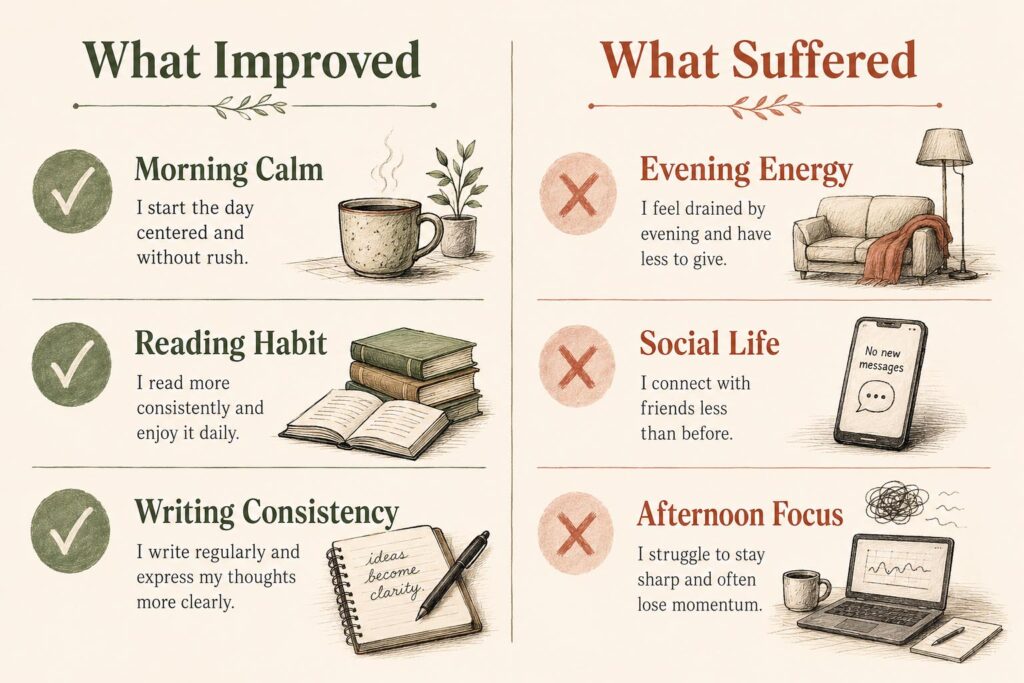
The morning calm was real. Knowing I had two hours before the world started was psychologically grounding. My writing routine became more consistent because I never ran out of time. I read more books in 30 days than I had in the previous three months.
But some things got worse:
My total daily output didn’t increase. I was just front-loading my energy. My evenings became dead zones. Workouts after 5pm felt impossible. My partner barely saw me awake.
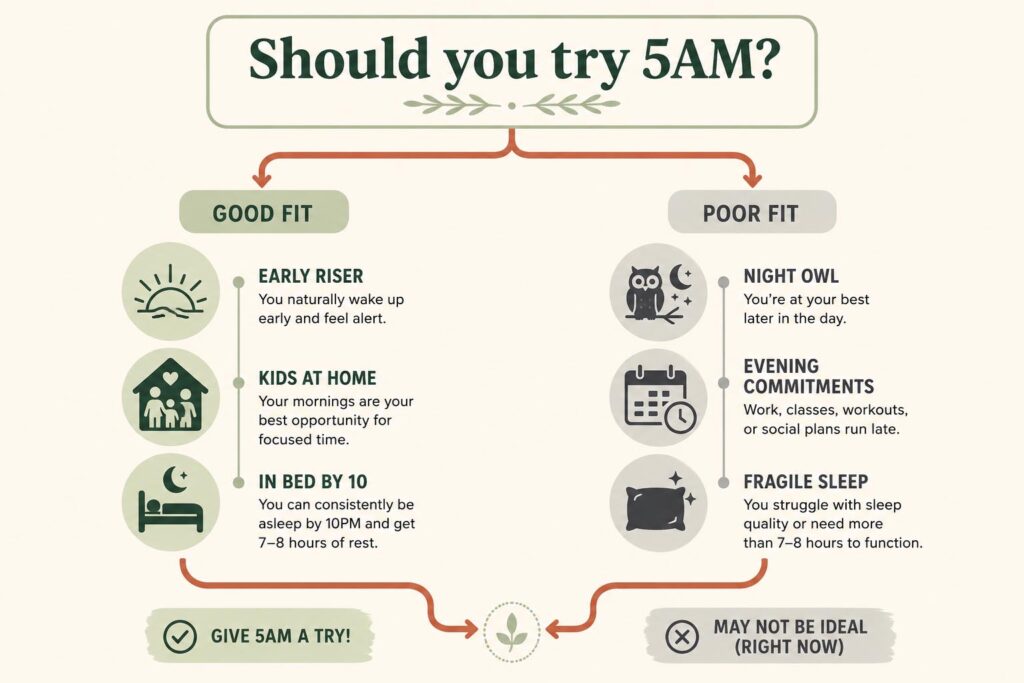
Who Should Actually Try It
The 5am routine works well for people who:
Naturally wake early without alarms. Have demanding mornings (parents of small kids, early shift workers). Need uninterrupted creative time before family wakes up. Already go to bed before 10pm consistently.
It does not work well for natural night owls, people with social or work obligations after 7pm, anyone whose sleep is already fragile, or people chasing it because of internet hype.
The Compromise I Settled On
After the experiment ended, I didn’t go back to 7am. I also didn’t keep 5am. I landed at 6:15.
That’s the version that gives me a quiet hour without destroying my evenings. Two hours of my old morning, an hour of buffer, and I’m still functional at dinner.
The Centers for Disease Control and Prevention recommends adults get seven or more hours of sleep nightly. For me, that meant the math of 5am only worked if I was in bed by 9:45. That’s a hard sell most nights.
Final Thought
The 5am routine isn’t magic. It’s a tool. If your life setup makes it possible, it can carve out beautiful quiet time. If it forces you to sacrifice sleep or evening connection, the cost is too high.
Try it for two weeks before deciding. Be honest about what you’re trading. Then keep what works.