
The Early Morning Routine Habit That Changed My Sleep and Mood

For two years, my mornings happened entirely indoors. I woke up, made coffee, opened my laptop, and didn’t see the sky until lunch. I felt foggy, anxious, and weirdly tired even after eight hours of sleep.
The fix was the most boring habit on this site. Five minutes outside before 8am. That’s it.
Going outside in the first hour after waking sets your circadian rhythm, lowers cortisol stress response, improves mood, and helps you sleep better that same night. You don’t need exercise. You don’t need a long walk. Five to ten minutes of natural light on your face does most of the work.
Why Indoor Mornings Don’t Work
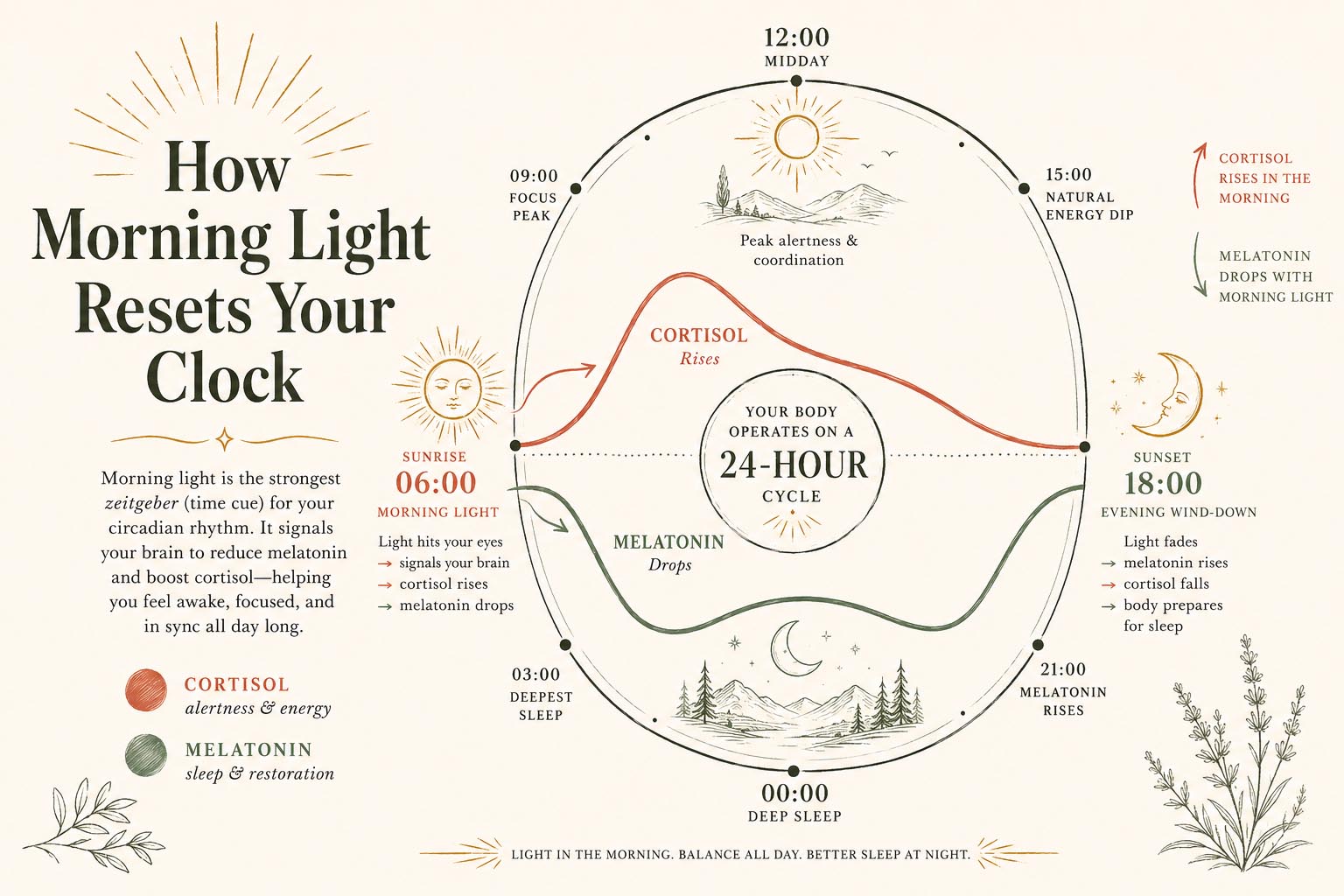
Your body uses morning light as a clock. When daylight hits your eyes early, your brain knows the day has started and adjusts hormone levels accordingly. Cortisol rises, melatonin drops, and your internal sleep timer resets for the night ahead.
When you skip morning light, that signal never arrives. You feel groggy. You sleep worse the next night. The cycle repeats.
What the Research Actually Says
A 2022 study published in the Journal of Affective Disorders found that people who got outdoor light exposure in the first two hours after waking reported better mood and sleep quality than those who stayed inside. The National Institutes of Health backs this up: morning sunlight is the strongest natural cue for circadian alignment.
You don’t need direct sun. Even cloudy outdoor light is 10 to 100 times brighter than indoor lighting. Your eyes can tell the difference, even when it doesn’t feel like much.
Read more: I Tried the 5AM Morning Routine for 30 Days
My Five-Minute Rule
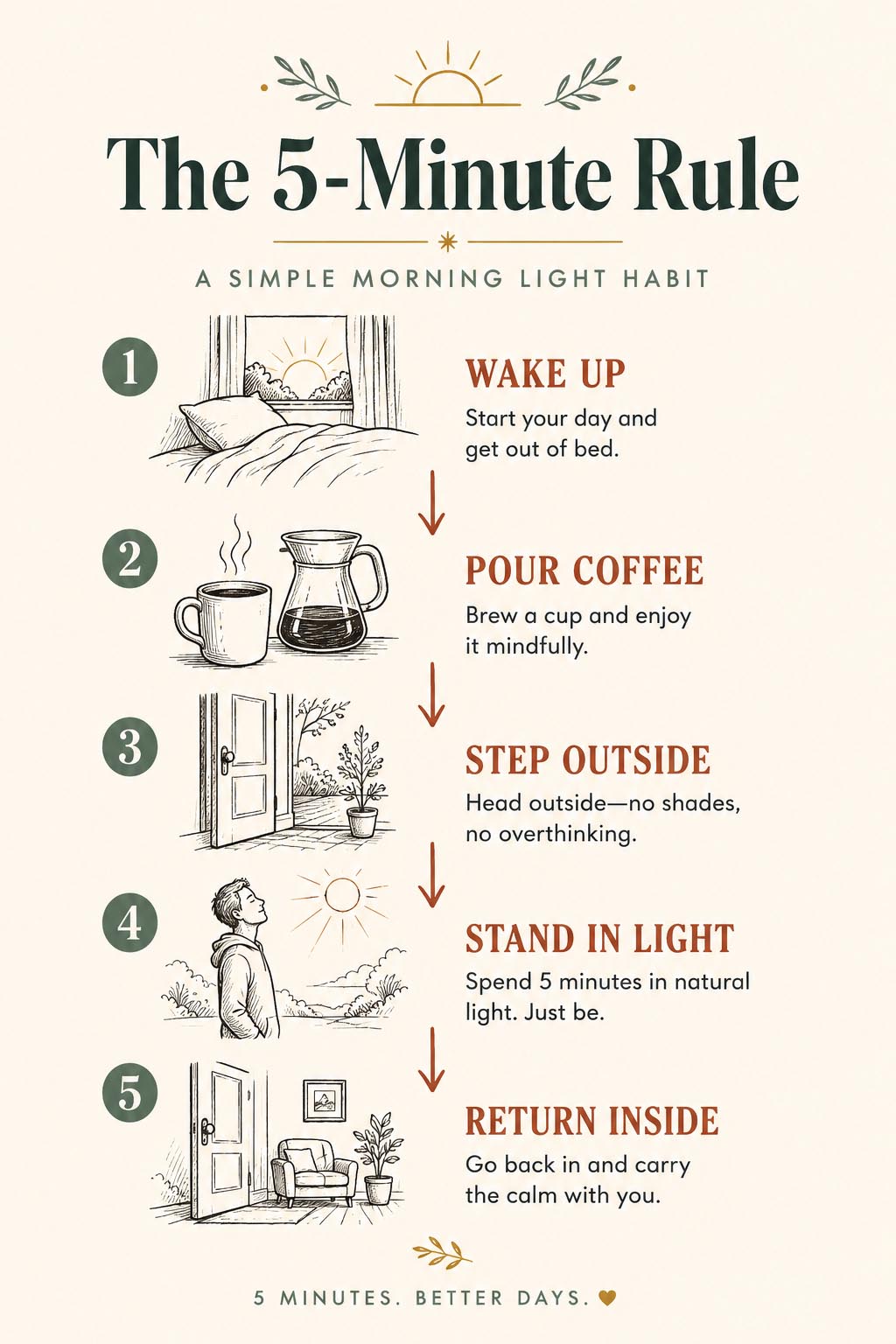
This is the entire habit. Within the first hour of waking, I go outside for at least five minutes. No phone. No goal. No agenda.
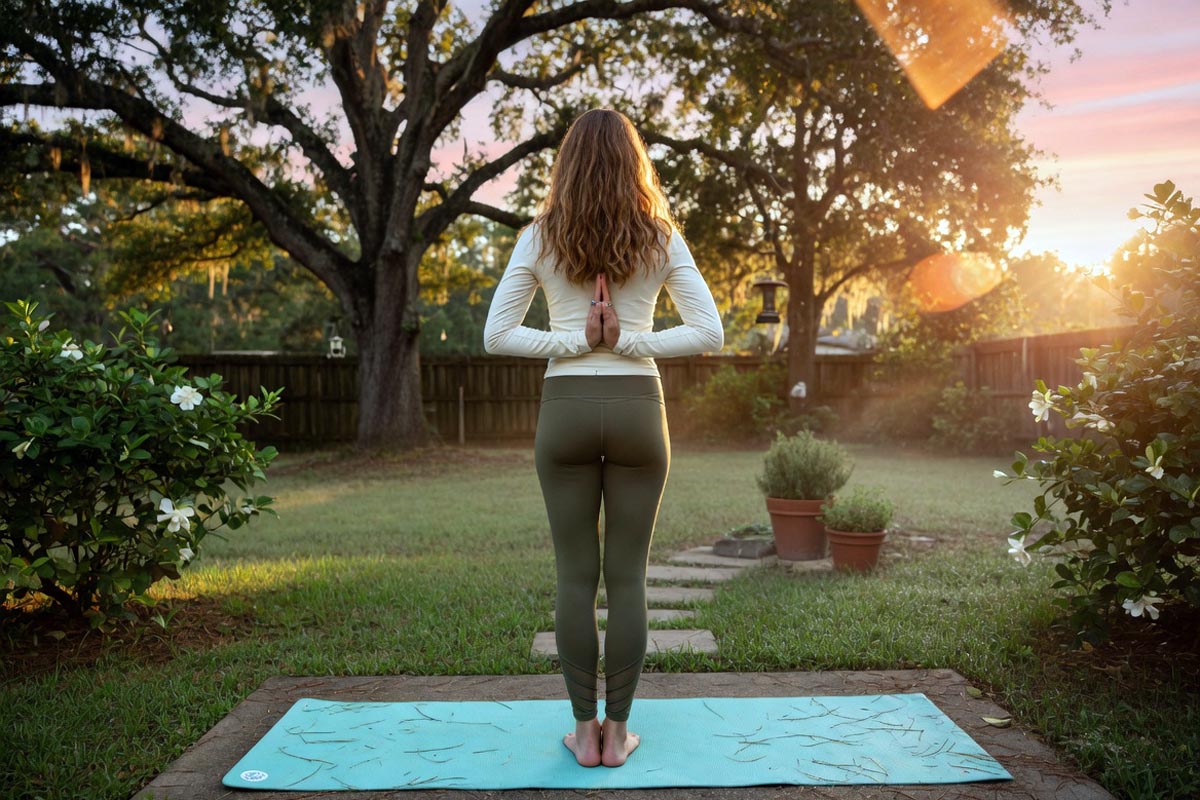
Some mornings I sit on the back step with coffee. Some mornings I walk to the end of my street. Some mornings I stretch in the grass. The activity doesn’t matter. The light does.
What I Actually Notice
Within the first week, I started feeling less foggy by 9am. By week two, I was falling asleep faster at night. By week three, my afternoon slump was smaller.
Nothing dramatic. No life transformation. Just a steadier baseline that compounds.
Also know: Morning Yoga Routine for Beginners
What to Do If You Live Where Mornings Are Cold or Dark
I get this question constantly. Two answers.
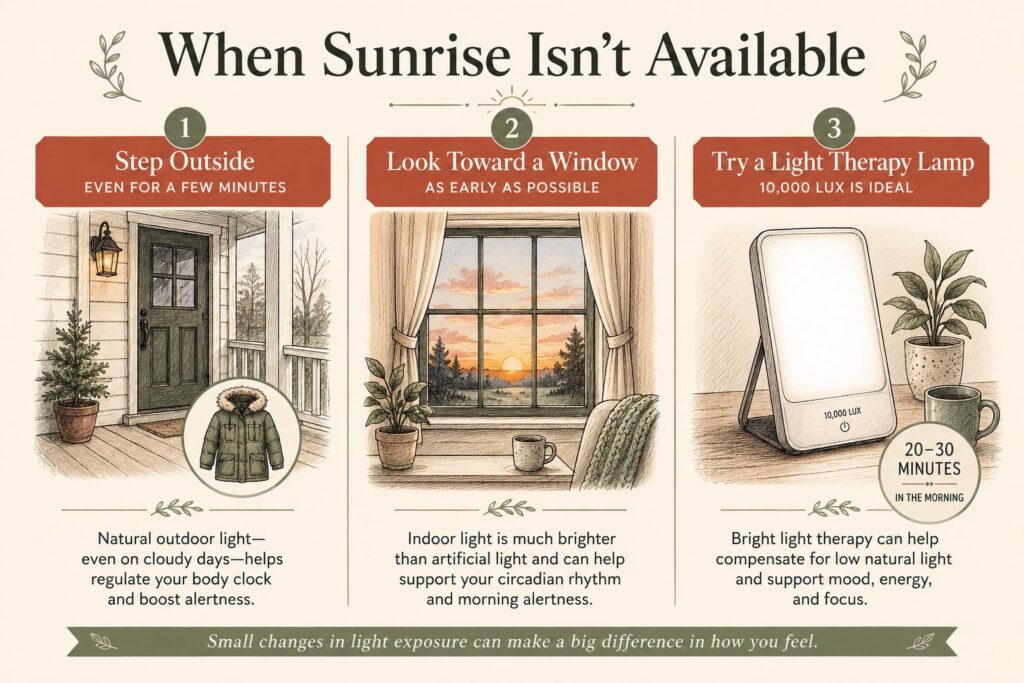
If it’s cold, dress for it and stay shorter. Two minutes of outdoor light beats zero. Stand on a porch with a coat on if you have to.
If it’s still dark when you wake (winter, far north), open a window, sit by it, and wait for first light. A bright sunlight lamp (10,000 lux) used for 20 minutes is the closest indoor substitute, supported by clinical research on seasonal mood.
What Outdoor Time Replaces
The hour I used to spend scrolling in bed is now ten minutes outside and fifty minutes of focused work. Same total time. Different energy entirely.
I also stopped needing a second coffee before noon. The light does what caffeine was trying to do.

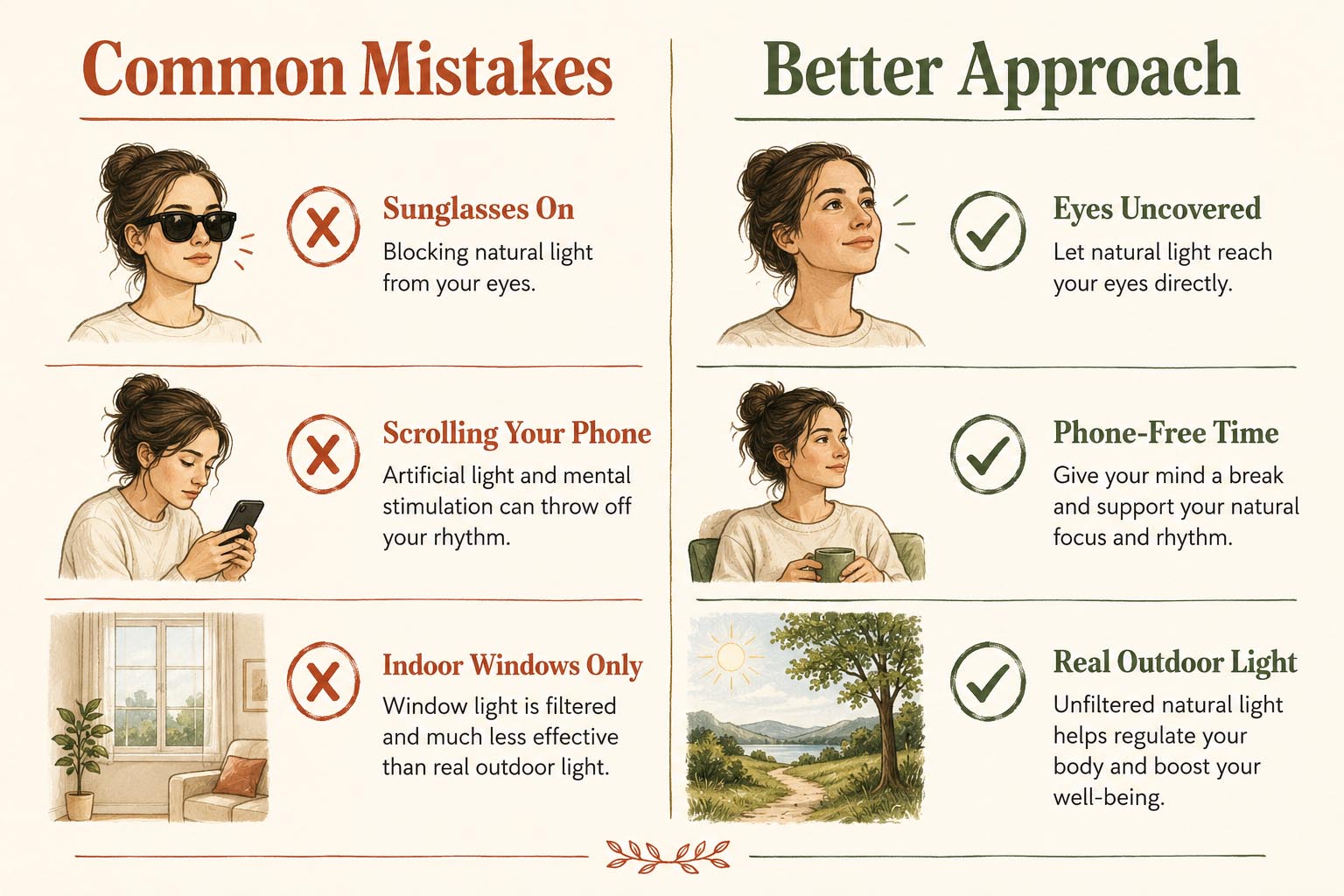
Common Mistakes
People try too hard. They turn morning light into a workout, a meditation session, a phone-free retreat with all the rules. Then they skip it because it became another chore.
Keep it simple. Step outside. Look at the sky. Notice what the air feels like. That’s the practice.
Sunglasses block most of the benefit, so leave them off for the first few minutes. Looking near the sun is fine. Looking directly at it is not.
How to Start Tomorrow
Pour your usual coffee. Carry it outside. Stand or sit somewhere that lets you see the sky. Stay until your mug is half empty. Go back in.
You just did the habit. Repeat tomorrow.
If five minutes feels easy after a week, stretch it to ten. If ten feels easy, walk. And if walking feels easy, you’ve built one of the highest-return morning habits there is, and it cost you nothing.
Final Thought
The internet wants morning routines to be complicated because complicated routines sell courses. Going outside doesn’t sell anything. That’s part of why it works.
Your body has spent millions of years calibrating itself to morning light. Give it five minutes tomorrow and see what happens.